Conveners: Philip J. Piper1 and Lam My Dung2
1 School of Archaeology and Anthropology, Australian National University, Canberra
2 Dept. of Archaeology, University of Social Sciences and Humanities, Hanoi.
Abstract:
It is becoming steadily more apparent that the transition from foraging to farming in Southeast Asia was far more complex than previously envisaged. Taking a multi-disciplinary approach, this session will examine recent research efforts into developing more reliable chronologies for the emergence of agriculture in Southeast Asia, understanding underlying economic strategies, including defining more clearly the origins and arrival of domesticated animals, identifying forager and farmer settlement patterns and lifeways – mobility vs sedentism, and interpreting potential interactions between foragers and early farmers across the region.
If anyone is interested in presenting in this session could they please send a presentation abstract to: philip.piper@anu.edu.au
Ngày 3/2/2018, Trường ĐHKHXH&NV, ĐHQGHN phối hợp với UBND thị xã Đông Triều (Quảng Ninh), Bảo tàng Quảng Ninh tổ chức hội thảo báo cáo kết quả khai quật tại các di tích: Am Ngọa Vân, Đá Chồng, đền An Sinh và mộ táng Trại Lốc, nằm trong Khu Di tích quốc gia đặc biệt nhà Trần tại thị xã Đông Triều, tỉnh Quảng Ninh.
Tham dự hội thảo có PGS.TS Tống Trung Tín (Chủ tịch Hội Khảo cổ học Việt Nam), GS.TSKH Vũ Minh Giang (Chủ tịch Hội đồng Khoa học Đào tạo, ĐHQGHN, Phó Chủ tịch Hội đồng Di sản Quốc gia), đồng chí Trần Tiến Dũng (Phó Giám đốc Sở Văn hóa - Thể thao tỉnh Quảng Ninh), đồng chí Hà Hải Dương (Phó Bí thư Thị ủy, Chủ tịch UBND thị xã Đông Triều), GS.TS Phạm Quang Minh (Hiệu trưởng Trường ĐHKHXH&NV, ĐHQGHN) cùng nhiều chuyên gia, nhà nghiên cứu về khảo cổ và lịch sử, lãnh đạo các ban ngành tại thị xã Đông Triều.

GS.TS Phạm Quang Minh phát biểu tại hội thảo

Đồng chí Hà Hải Dương (Phó Bí thư Thị ủy, Chủ tịch UBND thị xã Đông Triều) phát biểu tại hội thảo
Đền An Sinh là một di tích trọng yếu, tuy nhiên tư liệu hiện nay khá ít ỏi, nhất là các ghi chép về điện An Sinh dưới thời Trần. Cuộc khai quật đã giúp khám phá một quần thể di tích thời Trần với nhiều lớp kiến trúc, phản ánh quá trình phát triển của điện An Sinh dưới thời Trần, từ đó xác định được trục thần đạo, hướng của kiến trúc thời Trần; đồng thời hoạch định được phạm vi phân bố, quy mô cấu trúc của một tổ hợp công trình kiến trúc tương đối phức tạp qua nhiều giai đoạn lịch sử khác nhau.

PGS.TS. Đặng Hồng Sơn (Phó Trưởng khoa Lịch sử, Trường ĐHKHXH&NV) giới thiệu một số kết quả khảo cổ tại đền An Sinh
Việc phát hiện các đồ gốm hoa nâu, đặc biệt là chậu gốm hoa nâu cho thấy tính chất hoàng gia của kiến trúc điện An Sinh thời Trần, đồng thời cũng hé lộ những thông tin về niên đại khởi dựng của An Sinh dưới thời Trần. Theo các tư liệu hiện có, kiến trúc thời Trần ở An Sinh được khởi dựng vào đầu thế kỷ XIII. Đây là chìa khóa quan trọng nhằm xem xét tính chất của quần thể kiến trúc điện An Sinh. Kết quả khai quật cũng thu được một số di vật đặc biệt quý giá như tượng phượng bằng đồng, chậu gốm hoa nâu lớn trang trí hoa sen và rồng.

Đoàn đại biểu hội thảo dâng hương tại Thái Miếu và đền An Sinh trước khi tham dự hội thảo
Mộ táng Trại lốc có hai ngôi mộ được phát hiện gần nhau. Trong quá trình thi công đường, dù đã bị máy xúc phá hủy nghiêm trọng, nhưng qua khảo sát, đoàn khai quật cho rằng, cấu trúc quách mộ giống với mộ Nghĩa Hưng (từng xuất hiện tại Đông Triều năm 2010), Phần Cựu (Tam Đường, Thái Bình) và mộ Hải Triều (Hưng Hà, Thái Bình). Tất cả đều là những ngôi mộ của quý tộc nhà Trần tại các vùng đất tổ.
Am Ngoạ Vân - nơi tu hành và hóa Phật của đệ nhất tổ Thiền phái Trúc Lâm - là một quần thể chùa tháp với 15 điểm di tích chia thành 4 cụm, trong đó am Ngọa Vân là điểm di tích quan trọng nhất. Quần thể chùa tháp này được xây dựng và không ngừng được mở rộng cho đến thời Nguyễn thế kỷ XIX.

Toàn cảnh hội thảo
Đoàn đã tiến hành khai quật tại vị trí đỉnh núi - bàn cờ tiên, khu vực am - tháp phía dưới. Theo đánh giá sơ bộ của đoàn, dưới thời Trần, mặt bằng của khu vực Am Ngọa Vân chỉ có một cấp nền với quy mô tương đương với khu vực tòa Tam Bảo hiện nay. Tại đây, các công trình kiến trúc thời Trần có kết cấu khung gỗ, mái lợp ngói mũi sen; quy mô của các kiến trúc này không lớn, thể hiện đúng tinh thần của Thiền tông là hòa đồng chứ không cùng thiên nhiên.
Về cơ bản, cấu trúc mặt bằng hiện nay với hai cấp nền được hình thành dưới thời Lê Trung hưng và được duy trì đến nay. Thời Nguyễn về cơ bản cấu trúc mặt bằng không thay đổi, các hoạt động xây dựng dường như chỉ diễn ra tại cấp nền phía trên. Sau khi được trùng tu hay dựng mới, các kiến trúc thời Nguyễn dường như vẫn duy trì cấu trúc và quy cách thời Lê Trung hưng trước đó. Đến thế kỷ XX, hầu hết các di tích tại Ngọa Vân bị sập đổ, do vậy tất cả nội dung thờ tự đã có hoặc chưa có ở Ngọa Vân đều được dồn về khu vực am Ngọa Vân.
Di tích Đá Chồng là khu vực có địa hình bằng phẳng, rộng rãi, có đầy đủ những yếu tố có thuận lợi cho quá trình sinh sống của con người. Các cuộc điều tra khảo cổ học tại đây cho thấy, Đá Chồng 1 đã thấy dấu vết của các công trình: Tịnh thất, khu trung tâm, khu vườn tháp, vườn chùa, hồ nước; Đá Chồng 2 có dấu vết của các công trình kiến trúc và lò nung vật liệu kiến trúc. Kết quả nghiên cứu khảo cổ học năm 2017 cho thấy, dường như dưới thời Trần, tại khu vực vườn tháp đã có những am nhỏ được xây dựng tại đây. Dưới thời Lê Trung hưng, khi Ngọa Vân được trùng tu, tôn tạo, Đá Chồng đã được xây dựng và phát triển thành một quần thể chùa tháp lớn và hoàn thiện nhất trong các cụm kiến trúc chùa tháp tại Ngọa Vân.
Dựa trên các kết quả khai quật khảo cổ di tích, đoàn đưa ra các kiến nghị cụ thể với các di tích: quy hoạch chi tiết tổng thể đền An Sinh cần được điều chỉnh phù hợp với kết quả nghiên cứu của khảo cổ học, đồng thời kết nối với di tích lăng Tư Phúc, khai thác tối đa tính đa dạng địa hình và cảnh quan tự nhiên, biến đây thành khu công viên lịch sử văn hóa. Đối với di tích mộ táng Trại Lốc, cần hoàn lại mặt bằng của mộ; điều chỉnh tuyến đường khi đi qua di tích, khoanh vùng, đồng thời có phương án bảo vệ và phát huy lâu dài các giá trị của di tích. Bên cạnh đó, các nhà khoa học cần tiến hành điều tra tổng quát khu vực xung quanh Thái lăng để tìm kiếm dấu vết của các di tích tương tự và lập quy hoạch bảo vệ các di tích nếu có.
.jpg)
Các đại biểu đang nghe giới thiệu về một số di vật được phát hiện
Quy hoạch di tích Am Ngọa Vân cần bảo tồn cấu trúc mặt bằng và cảnh quan hiện tồn; kết nối tổng thể với chùa Ngọa Vân và Tịnh am tạo thành một tổng thể: Chùa, am - tháp và tịnh thất. Cần có kế hoạch kịp thời bảo tồn Đoan Nghiêm và Phật Hoàng tháp, hai công trình kiến trúc quan trọng hiện còn tại di tích.
Đối với di tích Đá Chồng, đoàn kiến nghị việc phục dựng, tôn tạo lại quần thể kiến trúc này theo cấu trúc và quy mô mặt bằng thời Lê Trung Hưng đã phát hiện, qua đó đáp ứng được các yêu cầu về công năng, cảnh quan kiến trúc và tính khả thi cao. Đồng thời định hướng quy hoạch thành hai phân khu với vùng lõi là kiến trúc văn hóa tâm linh và vùng khai thác cảnh quan, phát triển dịch vụ, xây dựng Đá Chồng trở thành một trung tâm tín ngưỡng, tôn giáo và du lịch tâm linh. Hồ nước cần được cải tạo lại để vừa tạo cảnh quan vừa là nơi dự trữ nước sạch phục vụ sinh hoạt cho toàn bộ quần thể di tích Ngọa Vân...
Tại hội thảo, các nhà khoa học, các đại biểu cũng đã đóng góp nhiều ý kiến về quy hoạch khoanh vùng bảo vệ di tích, phương án bảo tồn, tôn tạo di tích... Để triển khai và thực hiện công tác quy hoạch, trùng tu, tôn tạo và phát huy giá trị các di tích nhà Trần thì việc nghiên cứu cấu trúc, quy mô, xác định giá trị là quan trọng. Kết quả khai quật khảo cổ đã khẳng định giá trị của các di tích nhà Trần, qua đó sẽ cung cấp các luận cứ khoa để quy hoạch, đề xuất phương án bảo tồn, trùng tu, tôn tạo và phát huy giá trị của các di tích.
Hoài An (ussh.vnu.edu.vn)
David Blundell, National Chengchi University, Taiwan / University of California, pacific@berkeley.e
Frank Muyard, EFEO (French School of Asian Studies) / National Central University, Taiwan, frank.muyard@gmail.com
This proposal for our IPPA panel invites people working on sites from indigenous perspectives. Projects are centred on the cultural resources and experiences of local people exploring their heritage story vis-à-vis issues of language extinction, ethnic identification, access to cultural resources, equiped with advanced research technologies such as geographic information systems (GIS) and 3D mapping (virtal reality, VR displays), teaching of local history in public education, and adapting to multiculturalism and social transformation, all of which are components of cultural resource management (CRM). We encourage topics in the process of research for the understanding of socio-cultural development through historical ecologies and adaptive changes to landscapes and settlement patterns vis-à-vis early agriculture, horticulture, and urbanization.
Indigenous field schools in archaeology are prime examples to teach an overview of the historical influences from local ethnographic methods as applied to indigenous archaeology. This kind of interactive archaeo-ethnology could explore for example, indigenous responses to Spanish colonial rule creating the Ifugao rice terraces of the Philippine highlands of Luzon, Jiu / Xinxianglan Paiwan sub-group histories, early craft development in Orchid Island and the Batanes, and other local case studies of our regions in Asia Pacific to share with our colleagues and students.
Archaeological surveys have since decades identified in the archipelagos of the Pacific a diversified set of pre-contact settlement patterns, testimony of former cultural traditions of landscape appropriation and enhancement. These rank from sometimes massive habitation, ritual or funerary constructions to dense clusters of village/town or fortified settings, as well as extended surfaces of intensified horticultural arrangements. Until recently, the vast majority of the maps produced by archaeologists where the result of long and painstaking survey projects, often in scrub or forested ecological environments, limiting the visibility of field remains and impacting on the extent as well as sometimes the completeness of the final maps. The ever-growing corpus of technical high resolution methods applied to the study of archaeological landscapes, especially (but not only) with the recent development of LiDAR (Laser detection and ranging) coverage in a number of islands across the region, has allowed to renew interpretation of the density of former landscape uses across Oceania. This has prompted reconsideration of a number of well settled assumptions, like the supposed poor use of Melanesian landscapes when compared to Polynesia. This session proposes to present a series of case-studies on the latest developments of archaeological and related studies in the field of cultural landscapes in the Pacific region, addressing different approaches associated to the wide range of techniques that can today be applied to this topic.
- Nxb: Giáo Dục Việt Nam
- Khổ: 16 x 24cm
- Số trang: 326 trang
Nội dung cuốn sách: Nhân học là một bộ môn khoa học nghiên cứu về loài người, đây là môn khoa học rất khó, cần phải có kiến thức tổng hợp từ nhiều khoa học khác nhau để lý giải những vấn đề, những giả thuyết mà sự việc đã diễn ra hàng triệu, hàng trăm nghìn năm về trước.
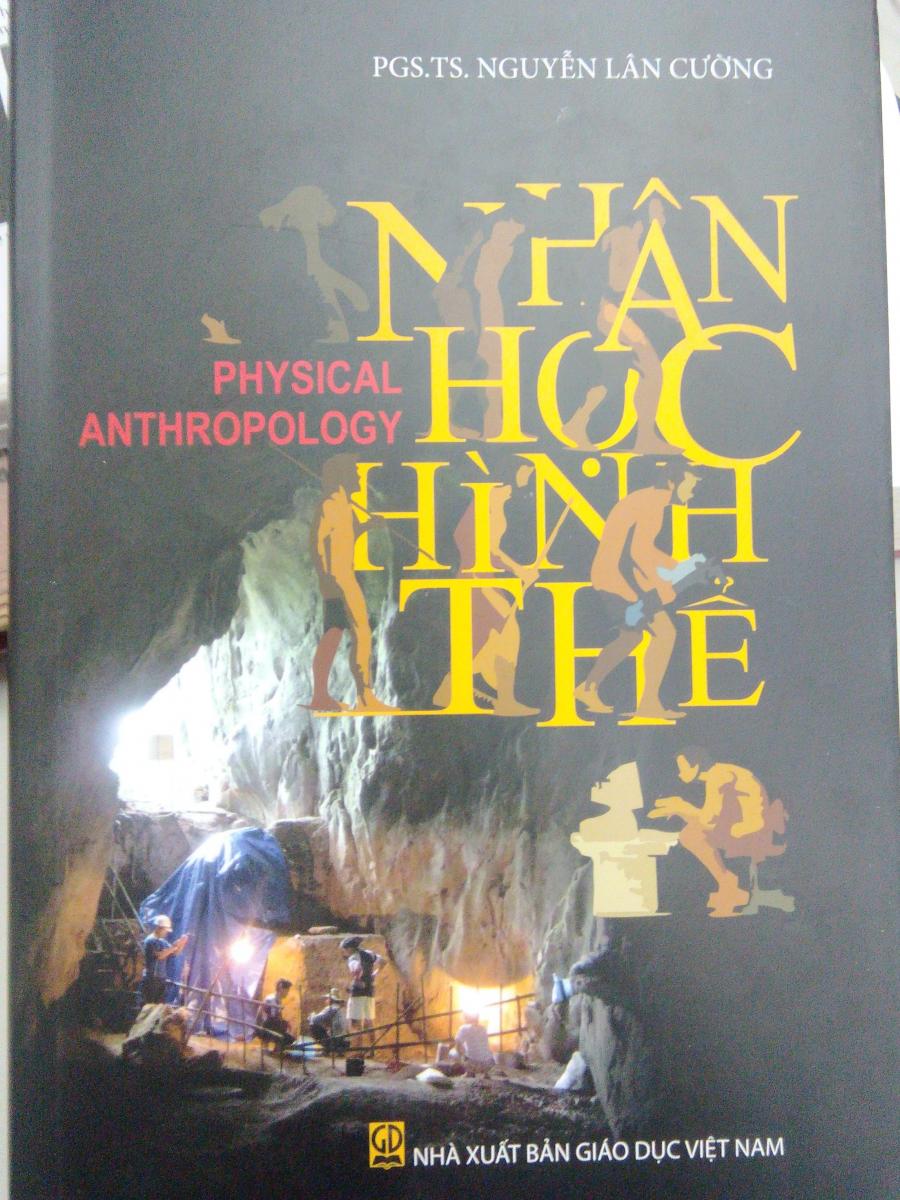
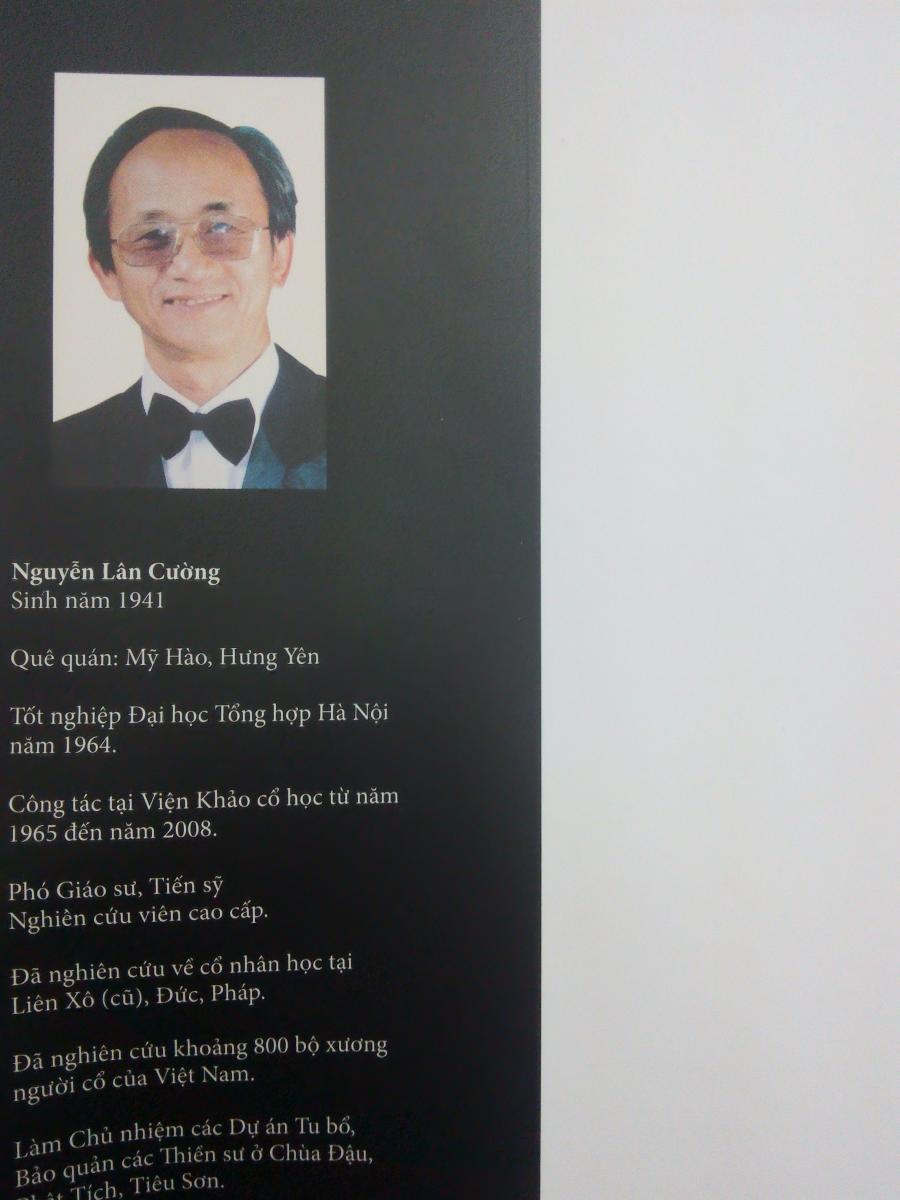
PGS.TS Nguyễn Lân Cường – người đã có hơn 40 năm làm việc tại Viện Khảo cổ học, Viện Hàn lâm KHXH Việt Nam, nay là Tổng Thư ký Hội Khảo cổ học Việt Nam đã có điều kiện nghiên cứu về Cổ nhân học tại các nước có lĩnh vực khoa học này như Liên Xô (cũ), Đức, Pháp, Nhật. Tác giả cũng đã nghiên cứu khoảng 800 bộ xương người cổ ở Việt Nam, đồng thời đã có nhiều công trình khoa học đăng trong sách và tạp chí của nước ngoài như Hoa Kỳ, Đức, Thụy Điển, Nhật, Nga ... Cuốn sách ngoài những kiến thức về cổ nhân học còn nhiều kiến thức về sinh học như Di truyền học, tiến hóa, phân loại học động vật.
Từ lâu, nhân học hình thể là một bộ môn được giảng dạy ở nhiều trường đại học trên thế giới. Nhưng ở Việt Nam, chưa thấy được giảng dạy trong các trường đại học. Do vậy, cuốn sách cũng là cuốn giáo trình đầu tiên được biên soạn cho Trường Đại học Khoa học Tự nhiên, rất bổ ích và cần thiết cho các sinh viên nghiên cứu về lĩnh vực này.
Nội dung chính gồm 8 bài:
1. Khái niệm về nhân học hình thể
2. Di truyền học và tiến hóa
3. Linh trưởng
4. Trên họ người (Hominoidea)
5. Người đứng thẳng (Homo erectus)
6. Người khôn ngoan (Homo sapiens)
7. Những phát hiện về cổ nhân học ở Việt Nam
8. Những nhóm loại hình nhân chủng ở Việt Nam và vấn đề nguồn gốc người Việt.
Xin trân trọng giới thiệu!
- Nxb: Khoa học xã hội – 2017
- Khổ sách: 16 x 24cm
- Số trang: 855 trang
Nội dung cuốn sách:
Nhà Mạc thay thế nhà Lê, lên ngôi từ năm 1527 và bị nhà Lê giành lại quyền thống trị vào năm 1592. Sau đó, nhà Mạc phải lánh nạn lên Cao Bằng, tồn tại đến năm 1677 thì chấm dứt hoàn toàn. Nói đến thời Mạc là nói đến thời kỳ nhà Mạc tồn tại với tư cách là một vương triều (1527 – 1592). Nói đến văn khắc Hán Nôm thời Mạc là nói đến những văn bia và minh chuông mang niên hiệu nhà Mạc ở thời kỳ nhà Mạc trị vì. Thời kỳ này chỉ ngót một thế kỷ. Tuy rất ngắn so với lịch sử, song đây cũng là một thời kỳ không kém quan trọng trong lịch trính của các triều đại phong kiến Việt Nam.
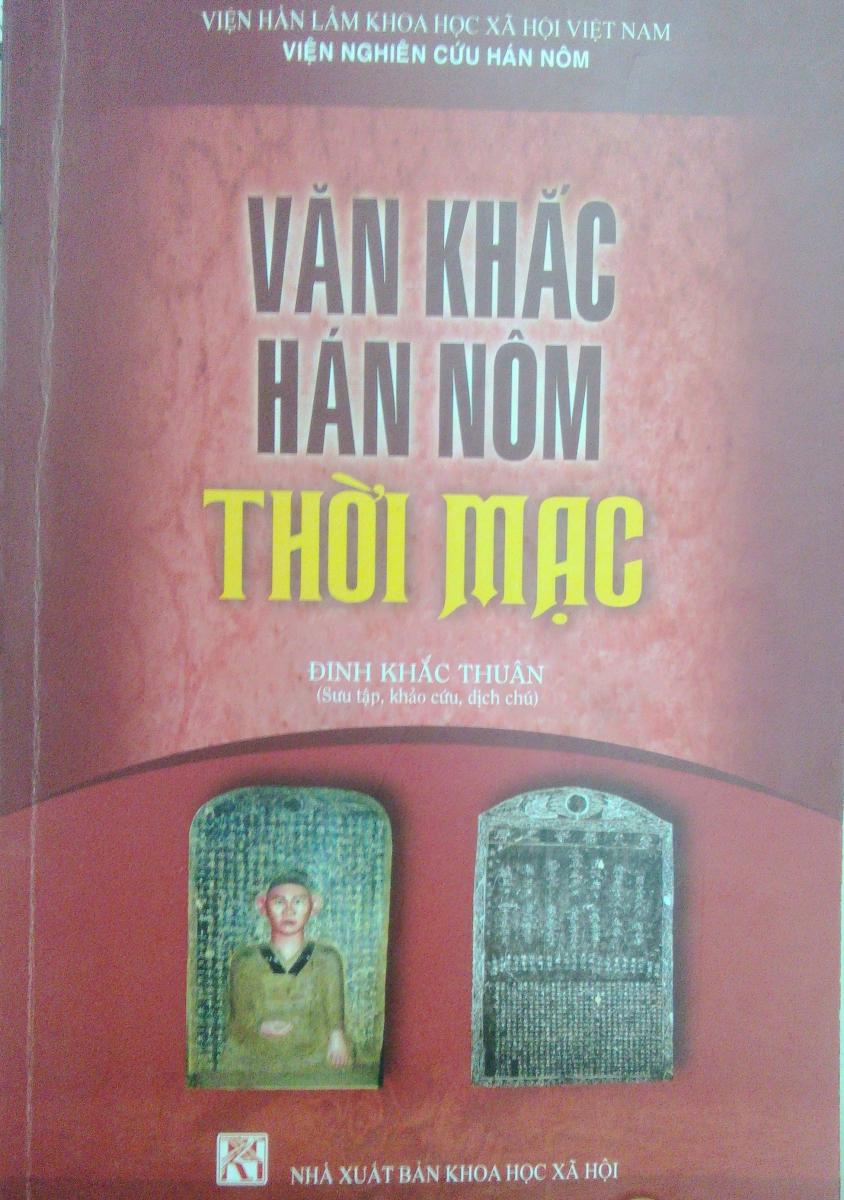
Cuốn sách là kết quả của đề tài cấp Bộ 2013-2014 của tác giả Đinh Khắc Thuân với tên đề tài là: Di sản Hán Nôm thời Mạc.
Xin trân trọng giới thiệu!
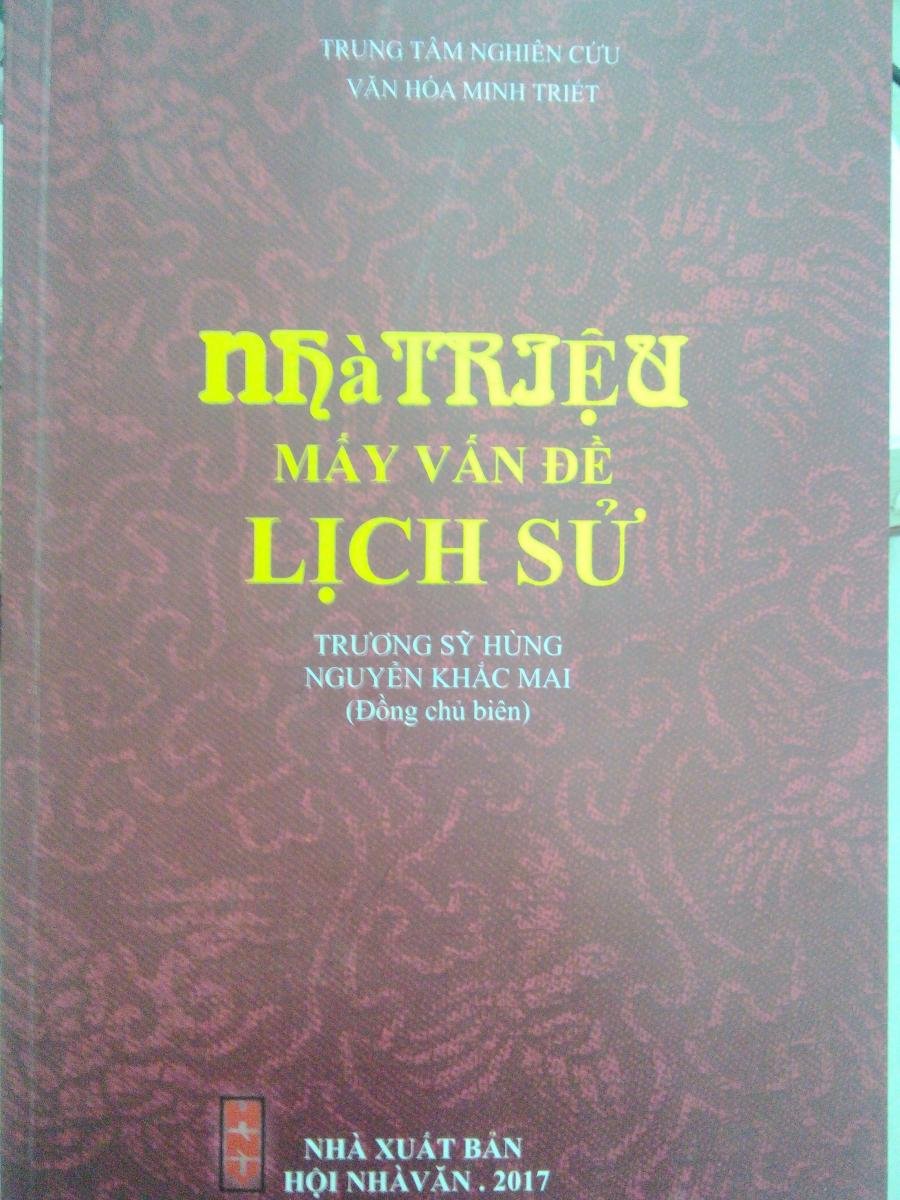
- Nxb: Hội Nhà văn – 2017
-Số trang: 414 trang
- Khổ sách: 14,5 x 20,5cm
Nội dung cuốn sách:
Cuốn sách nói về lịch sử nhà Triệu. Từ khi Triệu Đà xưng đế chống lại nhà Tần, lập quốc với danh xưng Nam Việt, phân dã bờ cõi một vùng từ “nam Ngũ Lĩnh ... đến Cửu Chân, Hoan Ái”, là sự mở đầu cho một thực thể mới, Việt tộc lập quốc, xưng đế, để rồi các triều đại phong kiến Việt đời nối đời, họ nối họ “hùng cứ một phương” sách cùng các thế lực phong kiến phương Bắc.
- Tổng hợp các bài viết của các tác giả trong cuốn sách:
| Tên tác giả Kiều Thu Hoạch Trương Sỹ Hùng Hà Văn Thùy Trịnh Sinh Nguyễn Việt Đinh Khắc Thuân Trần Thị Băng Thanh Vũ Thế Khôi Nguyễn Hữu Tâm Tạ Đức Nguyễn Văn An – Lưu Ngọc Thành Lưu Ngọc Thành-Phạm Lê Trung Trương Sỹ Tâm Lê Văn Chi |
Tên bài viết Triệu Đà Triệu Đà trong sử học Việt Nam hiện đại Xác định lại vai trò nhà Triệu trong lịch sử Việt Nam Nước Nam Việt qua góc nhìn khảo cổ học Triệu Đà Triệu Đà trong một số tư liệu Hán Nôm Vấn đề kỷ nhà Triệu và Triệu Vũ Đế Triệu Đà với việc truyền bá chữ Hán thời Nam Việt Tìm hiểu Triệu Đà và nước Nam Việt Một số ý kiến về Triệu Đà của các tác giả phương Tây Một số tài liệu, hiện vật thờ Triệu Đà ở tỉnh Bắc Ninh Lễ hội đình Xuân Quan, tỉnh Hưng Yên Lễ hội đền Đồng Xâm tại Thái Bình Thần tích Triệu Vũ Đế ở di tích lịch sử quốc gia đình Xuân Quan, huyện Văn Giang, tỉnh Hưng Yên. |
Công cụ chặt thô - hang Xóm Trại, Hòa Bình.
Hiện vật khảo cổ của Trung tâm Tiền sử Đông Nam Á CESEAP